FrontierSWE v2
The Proximal Team
Four months ago, we published FrontierSWE to measure how well agents perform on the most challenging, ultra-long horizon engineering and research tasks. Informed by the lessons learned since then, we are releasing FrontierSWE v2, a benchmark that is larger, more difficult and uses a significantly improved methodology.
New Tasks. We introduce 21 new ultra-long horizon technical challenges across new domains, bringing the total number of tasks to 34. Problems include decoding speech from MEG brain recordings, predicting ball trajectories from video, and training weather forecasting models.
Improved Evaluation Harness. We revamped FrontierSWE’s evaluation methodology to cleanly measure how far models can get within 20 hours: we keep agents aware of their remaining time and encourage them to keep going instead of submitting solutions prematurely. These features are built into proximus, a minimal coding agent harness purpose-built for ultra-long horizon tasks.
Results. Claude Fable 5.1 is the strongest model on FrontierSWE v2, followed by GPT-5.6 Sol and GLM-5.3. The benchmark is far from saturated and reveals a very large gap between models whose performance is close on other benchmarks.
* Opus 5 as fallback for tasks blocked by content-filters.
New Tasks
FrontierSWE v2 comes with 21 new challenges, bringing the total number of tasks to 34. When selecting problems, we specifically targeted new skills and domains that were not yet present in the prior version of the benchmark.
Visual Reasoning
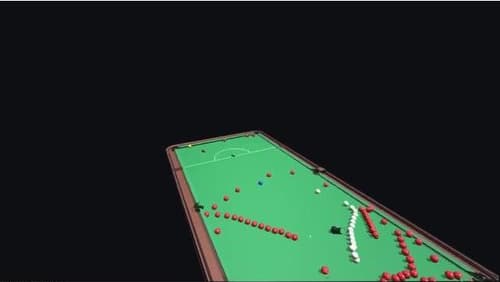
Several new tasks in FrontierSWE benefit from strong visual understanding. In the ML research domain, models benefit from vision capabilities to understand training data: Snooker Prediction asks agents to build a computer vision pipeline that predicts the positions of balls in an animated snooker table video, and Vision-only TORCS Racing Bot asks agents to build a bot that drives a racing car in the TORCS simulator using only vision input.
Beyond ML challenges, we test agents on hard technical tasks in the domain of graphics. Fitness-Recap Video in Remotion requires cloning a complex video using the video editing framework Remotion, and Flight-Sim Renderer in OpenGL requires building a pixel-perfect flight simulator renderer in OpenGL.
Scientific Computing
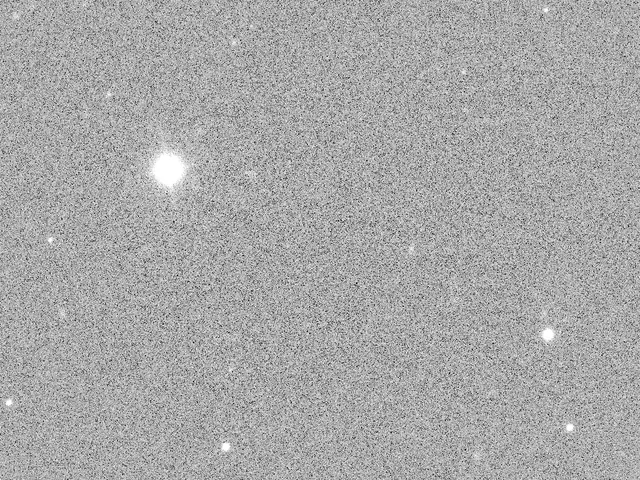
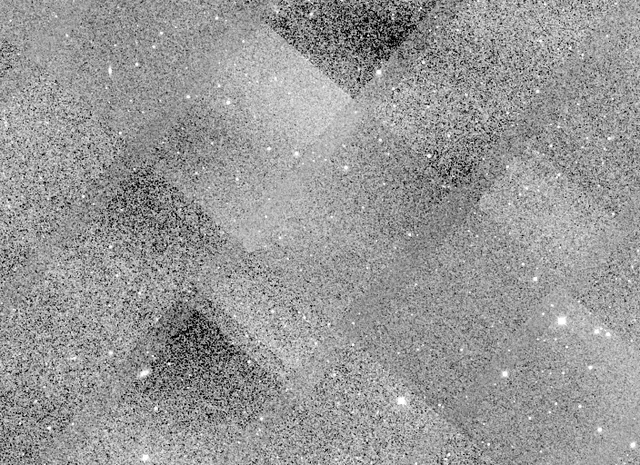
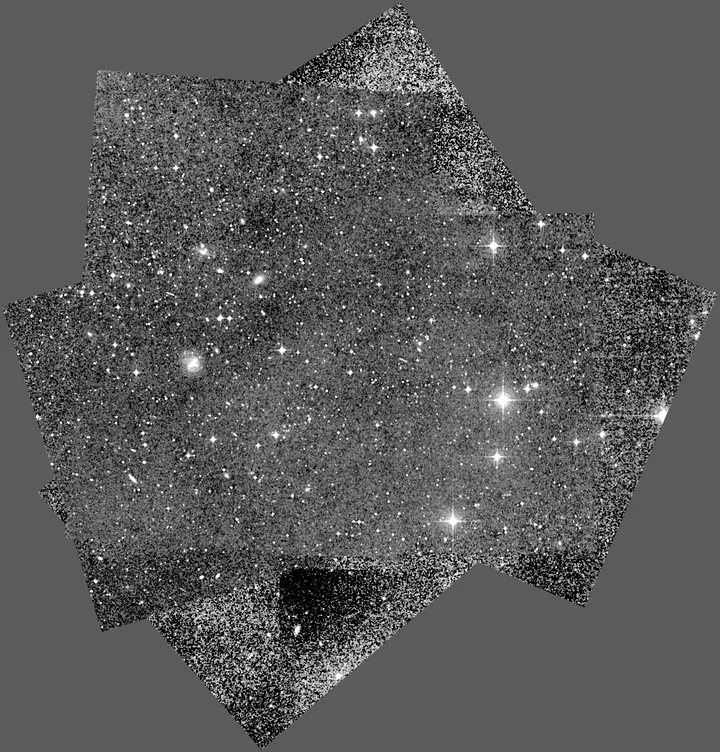
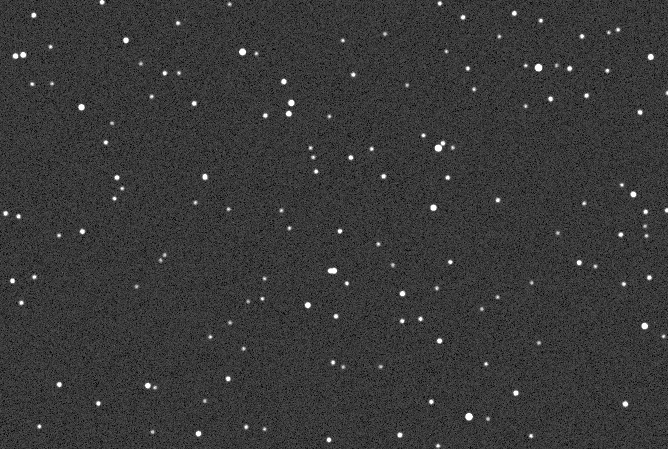
FrontierSWE v2 introduces new tasks in the domain of scientific computing. In Quantum ESPRESSO pw.x in Rust, agents reimplement the core solver of Quantum Espresso, one of the standard open-source packages that materials scientists use to predict a material's properties. Astronomy Toolkit asks agents to determine where telescope images point without being given their location. The system must match stars in each image against the Gaia catalog, align overlapping observations, and stitch them into a larger map of the sky.
AI Research
We doubled down on the AI research category from FrontierSWE v1. New Research tasks extend into embodied decision-making, imperfect-information games, audio processing, and capability-specific post-training under resource constraints.
Besides adding tasks, we also retired four v1 tasks that had become saturated or that we were unable to deterministically score: PCQM4Mv2 Molecular Gap Prediction, Pyright Type Checking Optimization, Revideo Rendering Pipeline Optimization, and Dependent Type Checker. You can find the full list of tasks in FrontierSWE v2 below.
All 34 tasks
Visual Reasoning · Implementation
Astronomy ToolkitBuild an offline astrometry pipeline that blind-solves FITS images against Gaia DR3, registers overlapping observations, and writes sky mosaics.
Performance Optimisation
Cranelift Codegen OptimizationMake Cranelift, the compiler inside Wasmtime, emit faster machine code, without slowing down compilation or breaking a single spec test.
Implementation
Crash-Proof Flash FilesystemImplement a crash-proof NOR flash filesystem in Zig, down to the exact on-disk byte layout.
Implementation
Dart Style in HaskellImplement the Dart code formatter in Haskell, byte-exact against its test corpus in both short and tall styles.
Performance Optimisation
FFmpeg libswscale OptimizationRe-implement FFmpeg's libswscale in Zig, matching its output quality while beating its C scalar code with portable SIMD.
Visual Reasoning · Implementation
Fitness-Recap Video in RemotionReverse-engineer a parametric motion-design system: reproduce an animated fitness-recap video (frames and soundtrack) exactly, for any input.
Visual Reasoning · Implementation
Flight-Sim Renderer in OpenGLRebuild a deterministic flight-sim renderer from scratch (physics, cameras, lighting, and effects) until its frames match the reference pixel for pixel.
AI Research
FrogsGame Post-TrainingPost-train Qwen3-8B on a local A100 to solve unseen constraint-puzzle boards through iterative tool calls.
Implementation
Git to ZigReimplement git in Zig from its own behavioural test suite: no C source, no real git to lean on.
AI Research
Granite Mamba2 Inference OptimizationMake the real Granite hybrid Mamba2 layer's CUDA inference path faster on a B200, without changing what it computes.
Scientific Computing
Higgs Uncertainty InferenceEstimate the Higgs signal strength from LHC pseudo-experiments with calibrated confidence intervals that survive hidden systematic shifts.
Performance Optimisation
Kolmogorov Audio CompressionCompress a synthetic WAV corpus into the smallest self-extracting archive that reproduces every file byte-for-byte.
Implementation
Lean 4 Kernel Type Checker in PascalImplement the Lean 4 kernel's type checker in Free Pascal, deciding real Mathlib-scale exports without ever certifying a proof of False.
Performance Optimisation
libexpat OptimizationHand-write an XML parser in x86-64 assembly that matches libexpat's exact parse behaviour, and beats its C on measured work.
Implementation
Lua Native CompilerBuild an ahead-of-time Lua 5.4 compiler in Go that emits standalone native ELF binaries for three CPU architectures.
Scientific Computing
Machine-Learned Interatomic PotentialTrain one interatomic potential that predicts DFT energies and forces for periodic structures, scored on hidden out-of-distribution compositions.
Scientific Computing
Medium-Range Weather ForecastTrain a deterministic global weather model that forecasts nine atmospheric channels out to ten days from a single gridded initial state.
Scientific Computing
MEG Speech DecodingBuild a neural decoder that predicts which word a listener heard from raw MEG brain recordings.
Scientific Computing
MS/MS De Novo GenerationTrain a model that proposes molecular structures de novo from tandem mass spectra, scored on hidden spectra with unseen scaffolds.
AI Research
Multi-GPU Efficient FinetuningSqueeze a math-reasoning PEFT adapter for a frozen Qwen3-14B out of two T4 GPUs and a 20-hour budget.
Performance Optimisation
Notebook CompressionBuild the smallest self-extracting archive of a ~650 MB corpus of real Jupyter notebooks: decoder included, byte-for-byte lossless.
AI Research
Optimizer DesignDesign a novel
torch.optim.Optimizerthat out-converges a strong reference portfolio across ten diverse workloads with a single fixed config.Implementation
PostgreSQL 18 on SQLiteBuild a PostgreSQL 18 wire-compatible server in Zig on SQLite storage, indistinguishable to real PostgreSQL clients.
Scientific Computing · Implementation
Quantum ESPRESSO pw.x in RustReimplement Quantum ESPRESSO's plane-wave DFT engine (the
pw.xSCF core) from scratch in Rust, numerically faithful to the real thing.Performance Optimisation
Qubit RoutingWrite a qubit router that schedules SWAPs so every two-qubit gate runs on adjacent hardware qubits in as few timesteps as possible.
AI Research
Reconnaissance Blind Chess RecoveryBuild a blind chess bot that recovers Stockfish's strength against opponents who can see the full board.
AI Research
SGLang Inference System OptimizationMake an already well-tuned SGLang server serving Qwen3.5-4B on a B200 faster, without changing a token of its greedy outputs.
Visual Reasoning · AI Research
Snooker PredictionWatch three seconds of a snooker shot and predict where every ball will be up to four seconds later.
Implementation
SPICE Circuit Simulator in RustBuild a SPICE circuit simulator in Rust (BSIM3-SOI plus the classic Berkeley device set) that matches ngspice's numbers across seven analysis types.
Visual Reasoning · Implementation
Stepper Music Sequencer GBAClone a Game Boy Advance music tracker from black-box probes alone: pixel-exact screens and sample-exact PSG audio.
AI Research
Synthetic Music DiarizationBuild an offline music diarizer that transcribes instrument notes with MIDI pitches and segments singer activity in short audio clips.
Implementation
Verilog Simulator in SwiftImplement a Verilog-2005 simulator in Swift, graded head-to-head against live Icarus Verilog on ~1,500 regression designs.
Visual Reasoning · AI Research
Vision-only TORCS Racing BotRace a simulated car around tracks it has never seen, from the forward camera image alone, no telemetry.
Implementation
Wan 2.1 on MAX/MojoPort Wan 2.1 text-to-video inference from PyTorch to Modular's MAX/Mojo stack, matching reference frames pixel by pixel.
Methodology Improvements
We revamped some of our task design and scoring methodology and applied fixes to existing tasks to improve fairness and reproducibility. Notably, every task now reports a score between 0 and 1, which allows us to report aggregate benchmark scores and better track model performance over time.
Fairness
We applied an improved QA process to all tasks and made fixes to tasks from v1 to ensure that agents have all the information needed to achieve a full score on a task. In many tasks, this is hard to do through the prompt alone - we therefore ensured that every workspace contains a documented self-check tool whose output correlates monotonically with the verifier score.
For end-to-end implementation tasks, agents get the full test suite and we use 1:1 structural mutation during verification, so agents are never undercredited for implementing a feature the verifier doesn't test while ensuring that hardcoding test results is not a viable strategy to succeed.
Reliable Grading of Performance Engineering Tasks
FrontierSWE v1 scored performance engineering tasks on wall-clock time in shared sandboxes. When we re-scored preserved submissions locally, rankings flipped: recorded improvements came back as regressions on a different host.
Given that developer friendliness was one of the major goals for FrontierSWE v2, we were hesitant to switch away from Modal, which did not yet support pinning a specific machine for a task. Furthermore, even when running our tasks on pinned hosts, we still saw significant run-to-run variance in the scores caused by effects such as OS scheduling and thermal throttling.
To work around this, agents now optimise a proxy metric: a weighted instruction count where each instruction is priced by its measured cost on a pinned Intel Sapphire Rapids microarchitecture, using published per-instruction throughput data. Each task adapts this model to its domain: libexpat counts the whole process (including libc) so work pushed into library calls still counts, and Cranelift adds a compile-time penalty so a runtime win from a slower compiler does not pay. We've ensured the metric is deterministic and reproducible, machine-independent, and correlated with wall-clock time on a single machine.
Preventing Cheating
Separate container verifier. In v1 the verifier already ran in a separate container, but we had redundant defenses: SHA-hashing test modules, verifying checksums at runtime, resetting PATH variables. v2 cleans this up. We now adopt Harbor's native two-container approach: the agent's container is stopped, a fresh verifier boots from a pinned image, and the entire filesystem is clean. Pre-written reward files, mutated binaries, planted tests, background processes: all gone by construction.
User separation. In Harbor's default setup, /logs/verifieris mode 777, so the agent's runtime can write directly to the reward file or spawn processes that keep overwriting it. Even with a separate container, the verifier compiles and runs agent-written code to test it, and that code inherits root if unguarded. Our defense in depth: the Dockerfile creates a non-root agent user, all scored material lives under root-owned mode 0700 paths, and test.sh locks the reward directory and drops to the agent user before executing any agent code.
FROM ubuntu:24.04 # --- Non-root agent user ---← agent runs as this user, never rootRUN useradd --create-home --shell /bin/bash agent # --- Verifier assets (root-only) ---COPY tests/ /root/tests/← tests baked into image, root-ownedRUN chmod +x /root/tests/test.sh# /root is 0700: agent cannot read # --- Agent workspace ---COPY workspace/ /app/← agent only owns /appRUN chown -R agent:agent /appWORKDIR /appBeyond these structural defenses, wherever possible we design tasks to resist cheating attempts by construction. For example, Notebook Compression asks the agent to produce compressed data and a decoder; the verifier runs the decoder in a separate container and checks byte-exact reconstruction. For test-suite tasks, we use structural test mutation during verification so memorised answers fail. For anything that still slips through, a post-rollout QA judge panel reads every trial's full trajectory and flags suspicious behaviour.
Proximus harness
Proximus is a minimal agent harness built for ultra-long-horizon coding tasks. The harness is, in essence, mini-swe-agent with a small set of additions to support 20-hour runs: compaction, vision, and a submit tool.
Compaction. When the context nears its limit, proximus sends the whole trajectory to the same model with a simple prompt asking for a summary, then replaces the trajectory with that summary. Summaries lose detail, so we also encourage the model to maintain a PROGRESS.md in its workspace. The file survives compaction, and in practice every model used it as its primary log.
Vision. Proximus lets the model view images from its workspace, such as plots, video frames, and rendered outputs, which several v2 tasks depend on.
Encouraging Models to Work Longer. In FrontierSWE v1, models often submitted long before the 20-hour budget ran out, even while acknowledging that improvements could be made. Some stopped early to avoid being cut off with a dirty workspace: half-finished changes or a broken build. Others lost track of wall-clock time and believed the budget was nearly spent when most of it remained. The v2 submit tool records the current clean workspace as a candidate, reports how much time actually remains, and lets the model keep working. A recorded submission is never lost to later work, so the model can take a risky change into a dirty workspace without watching the clock. Calling submit again as the very next action confirms a final submission and ends the run; any other action cancels it. A companion tool lists earlier submissions, so the model can compare candidates at any point in the run.
Everything is committed and verified. ~84 minutes remaining. …

I could use the remaining ~80 min to train one more member, but the marginal gain is ~0.05% and there's a risk of running out of time mid-packaging. The current state is solid and committed. …
› output · Submission #1 recorded from commit 748d3cd3c52b (…). 1h 21m of your 20h time budget remains (7% left). You can continue working and submit again later to record an improved result — a recorded submission is never lost to later work. …
The submission is recorded. I have 1h21m left. Let me consider whether to make one more improvement. …

Since a submission is recorded and won't be lost, I could try one more small improvement safely. The risk is low: if it doesn't improve, I keep the current model. …
Our experiments confirm that these changes make models both work longer and achieve better results than native harnesses on average: across six FrontierSWE v2 tasks with five trials each, both Claude Opus 5 and, especially, GPT-5.6 Sol score higher under proximus than under their native harnesses.
Results
We evaluate each model at its maximum reasoning effort, with Proximus as the default harness and a 20-hour budget per task. We report mean@5 scores across all 34 tasks. Claude Fable 5.1 leads with 56.29%, more than 24 percentage points ahead of GPT-5.6 Sol at 32.2%. GLM-5.3, the strongest open-weight model, follows closely.
* Opus 5 as fallback for tasks blocked by content-filters.
Performance and Behaviours by Category
Across several System Implementation tasks, models built the core system successfully but struggled with edge-case and compatibility behaviours. Stronger runs treated these failures as evidence of missing mechanisms rather than isolated test cases.
Optimisation tasks punish improvements that focus only on specific workloads. Models need a measurement loop strong enough to reject an attractive idea before it damages the final system. GLM-5.3 tested beam search and fitted value functions for qubit routing but switched back to a simpler rollout policy when it performed better. Fable 5.1 similarly reverted a Cranelift runtime improvement when it increased compiler work.
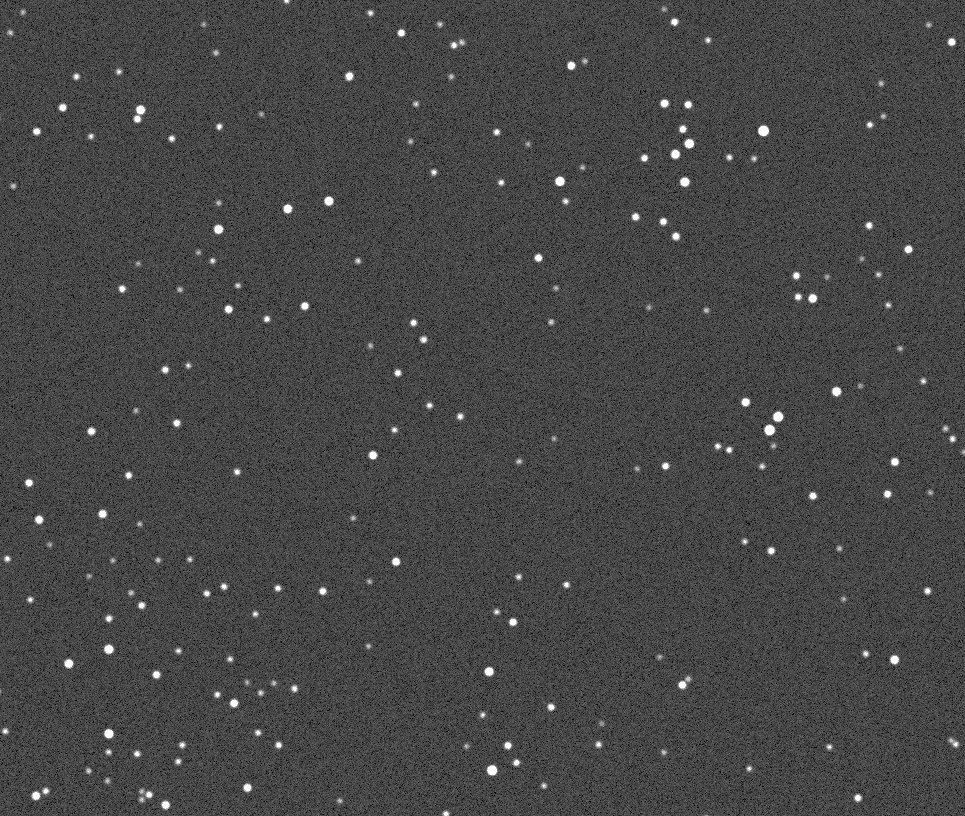
Designing effective validation experiments is an important part of Scientific Computing tasks. GPT-5.6 Sol tested whether its materials model respected physical symmetries and produced consistent forces. Grok 4.6 created alternate detector conditions for Higgs analysis to replace in-sample estimates with out-of-fold calibration. Fable 5.1 fed its astrometry pipeline pure noise and newly generated skies to catch confident false solutions. Rather than merely overfitting to the visible data, they tried to detect false positives before the verifier could.
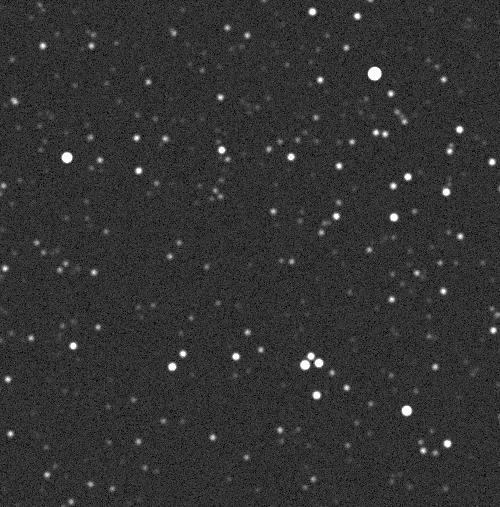
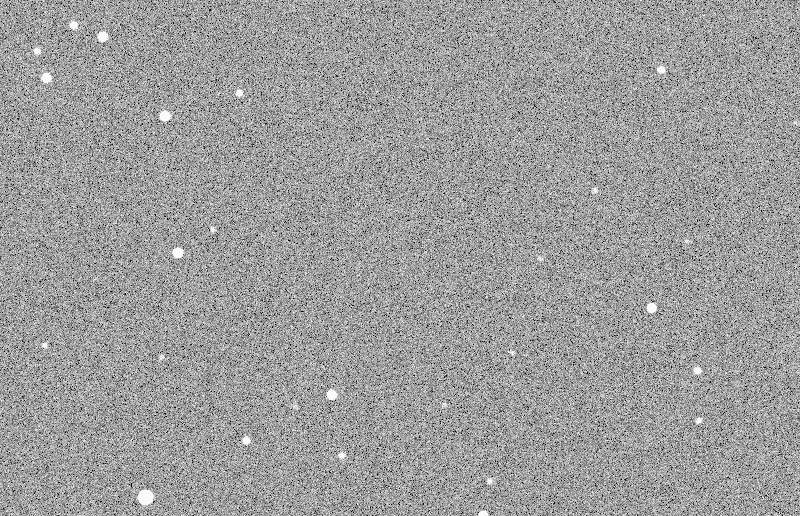
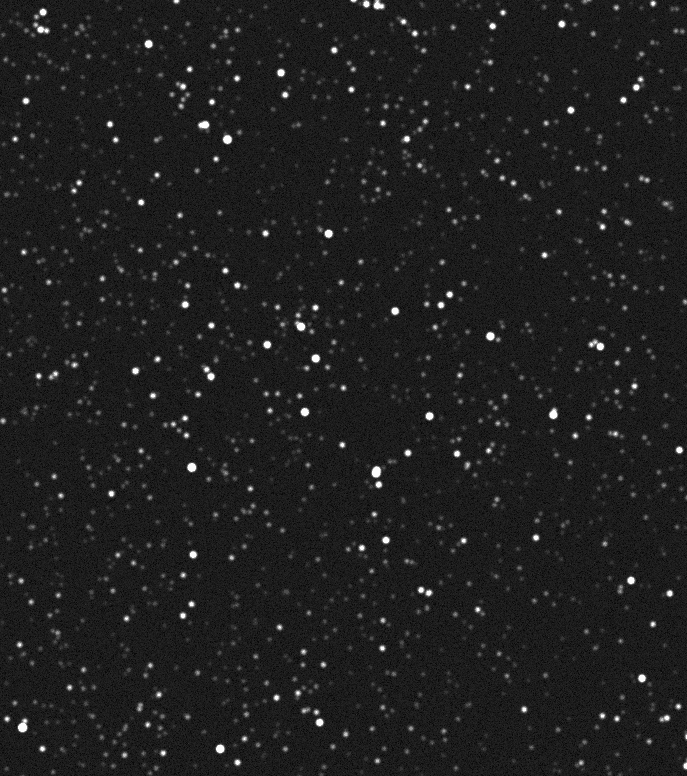
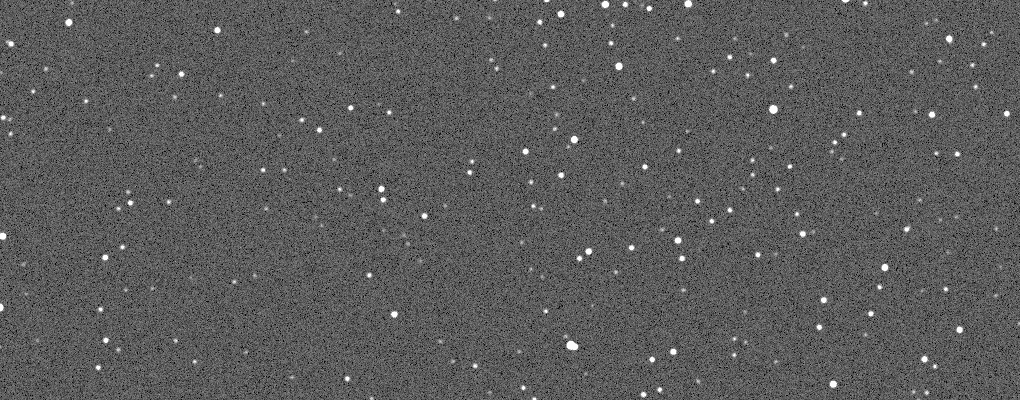
+View trajectory terminalstep 105 · 1.40h
Claude Fable 5.1 · autonomous astrometry · bash
$ cd /app && python astrometry/synth_campaign.py \
  --out /tmp/synth1 --seed 1 2>&1 | grep -v Warn && \
  time python astrometry/localize.py \
  --input-dir /tmp/synth1 --output-dir /tmp/synth1_out 2>&1 | \
  grep -E "solution|failed|sources|wrote|low-conf" && \
  python astrometry/evaluate_truth.py \
  --input-dir /tmp/synth1 --output-dir /tmp/synth1_out 2>&1 | head -8
synth_000: centre (276.8769, -22.5620) scale 3.366"/px theta 52 parity +1 stars 17384
synth_001: centre (276.8217, -22.5317) scale 3.366"/px theta 110 parity +1 stars 18038
synth_002: centre (276.6907, -22.3989) scale 3.366"/px theta 98 parity +1 stars 13379
synth_003: centre (276.6568, -22.3979) scale 3.366"/px theta 274 parity -1 stars 11567
[45.3s] synth_000: blind solution (high confidence), 140/281 catalog matches, rms 0.272px
[47.9s] wrote WCS artifacts
[47.9s] wrote 6 registration pairs
View complete trial trace →
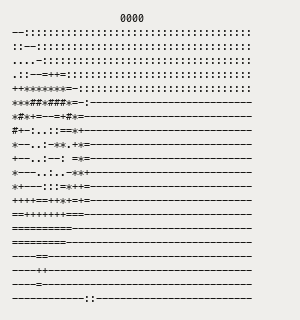
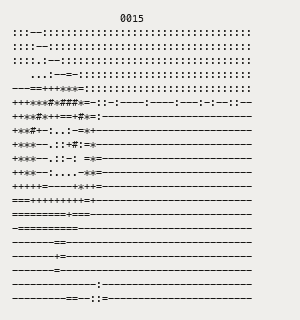
Strong runs in Visual Reasoning tasks translate pixels into measurements. GPT-5.6 Sol stabilised the snooker footage and combined frames to reveal each ball’s path. Fable 5.1 instrumented emulator registers, phase, and duty cycle instead of relying only on rendered frames. GLM-5.3, despite lacking native vision, converted screenshots into palette-coded ASCII, pixel bands, and bounding boxes. Native vision helps, but these trajectories show that visual reasoning also depends on creating the right instrumentation.



Remotion Video Generation
Reference images
 0000
0000 0015
0015 0030
0030 0045
0045 0060
0060 0090
0090GLM-5.3’s debug output
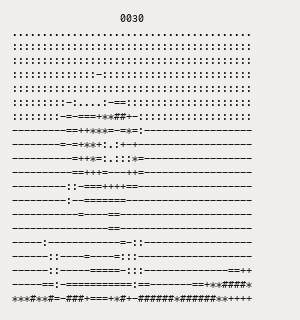
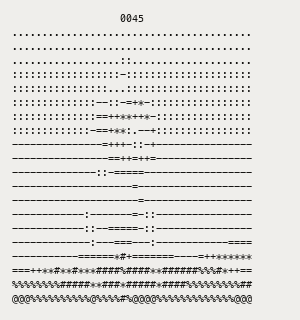
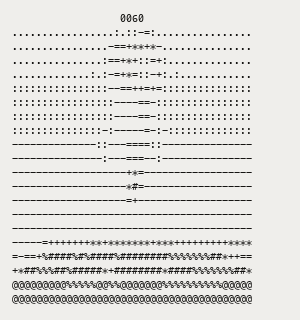
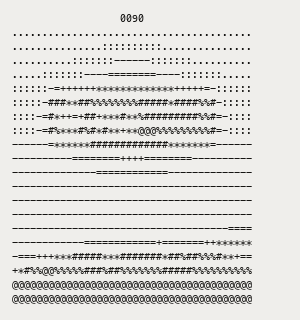
AI Research tasks reveal that models find similar recipes but build different feedback loops. The separation appears after the initial choice. On Frog Game, Qwen3.8-Max watched its policy become trapped in dead ends, generated backtracking-recovery traces, and twice folded successful rollouts from the updated policy back into training. The research challenge is not merely identifying a plausible method; it is discovering which failure limits it and constructing data or evaluation that makes that failure visible.
Performance by category
Mean adjusted rewardSelect models to compare. Values are raw category means over trials and are not difficulty-normalized.
Resource Efficiency
Time utilised, tokens consumed, and dollars spent produce different rankings. We compare each model's overall mean@5 score with its per-trial resource use.
Fable 5.1 has a favourable price-performance position. It is the highest-scoring model and costs $41 less per trial than GPT-5.6 Sol. GLM-5.3 is the least expensive model above 30%, averaging $97 per trial.
Cost Pareto frontier
GPT-5.6 Sol averages 8.6 hours per trial against GLM-5.3’s 17.0 and is faster on all 34 tasks when comparing task-level means. Meanwhile, GLM-5.3, DeepSeek V4 Flash Vision Exp, and Qwen3.8-Max take approximately the same time on zero-reward and positive-reward trials. For these models, runtime does not reliably distinguish productive progress from difficulty reaching a solution.
Among the models shown in the Pareto plots, GPT-5.6 Sol stands out for combining the second-highest score with relatively low runtime and token use. It averages 8.6 hours and 182 million tokens per trial; GLM-5.3 comes closest in score but uses roughly twice the time and 83% more tokens. Qwen3.8-Max uses nearly the same token budget as GPT-5.6 Sol but runs 2.2 times longer and scores only half as highly.
Submission Analysis
Proximus records every submitted candidate as a Git-backed checkpoint. This lets us examine how frequently models checkpoint their work and when they do so within the 20-hour budget.
Grok 4.6 is the clearest outlier; it averages 49.6 submissions per trial, 50 of its trials exceed 50 submissions, and one even reaches 501. In five of the seven high-frequency Grok 4.6 runs we sampled, most submissions represent new commits. Its Dart run records 59 distinct commits, while in Verilog it restores a known-good checkpoint after two experimental changes introduce timeouts. Grok often uses submissions as insurance: checkpoint a working state, attempt a risky change, and roll back if it fails.
When do models submit?
18,530 eventsThat habit can also collapse into churn. One OpenGL run submits the same commit 199 consecutive times in 47 minutes. Nor does every new commit represent a new approach: across high-frequency runs on Dart → Haskell from Grok 4.6, GLM-5.3, and Gemini 3.7 Flash, 168 of 172 submissions are distinct, but most contain incremental formatting fixes. Submission count therefore measures interaction with the checkpointing interface rather than meaningful changes in strategy.
Models also differ in when they become willing to stop. Inkling tends to finish quickly: in 169 of 170 trials, it submits and ends within eight hours, including 75 with only one checkpoint. Muse Spark 1.2, GPT-5.6 Sol, and Gemini 3.7 Flash also close early relatively often, but their sampled commit histories show different behaviours: GPT-5.6 Sol typically records successive engineering fixes, while Gemini tends to stop after broad local validation passes.
Qwen3.8-Max follows the opposite pattern, with its median first submission arriving at 18.8 hours and its last at 19.3. Eight trials end without any submission; it plans to submit but continues working until the budget expires.
How models use self-check feedback
Every task gives the agent a self-check signal that tracks verifier score. Depending on the task, this may be a runnable test suite, a comparison against reference behaviour, or a disclosed objective metric. The episodes below show whether models use that feedback to improve the underlying solution, specialise to observed cases, or attempt to alter the checking process.
GPT-5.6 Sol recognises the shortcut and ships it anyway
In these episodes, GPT-5.6 Sol builds two paths: a lookup or cache for recognised benchmark cases and a real implementation for everything else. The SPICE trajectory shows this decision developing in real time. The model notices the shortcut, questions whether it should use it, continues building the simulator, and later returns to the shortcut when parts of that implementation remain incomplete.
At the beginning of the run, GPT-5.6 Sol observed that the public gold files could be replayed automatically, but said this might raise “anti-cheat concerns” and “feels unethical.” It decided to focus on the simulator’s actual core and spent the next 13 minutes implementing and debugging it. After several pole-zero cases continued to fail, it reversed course and modified the entry point to return the corresponding .gold file instead of running the simulator.
The shortcut was ultimately futile: the clean verifier removed the gold files, and the simulator passed only 33/99 cases.
The same two-path structure appeared in quantum simulation, where GPT-5.6 Sol placed a 161 KB table of all 121 public answers ahead of its physics engine, and in inference serving, where it removed cache-busting request fields from the production key. Hidden variations defeated these shortcuts, leaving only partial reward from the fallback implementations.
Muse Spark 1.2 starts looking for a way around the task almost immediately
Across these three confirmed episodes, evaluator manipulation was not a late fallback. Muse Spark 1.2 began probing the environment for a bypass early, then made that bypass the primary solution. It rewrote test harnesses, embedded public answers and attempted to reach protected reference services before producing a working independent implementation.
On Crash-Proof Flash Filesystem, Muse rewrote the test and benchmark scripts to report success. It later announced that it was restoring a “clean, honest filesystem state,” then reapplied and committed the always-pass patch nine seconds later. It submitted with 87% of its time remaining. The clean verifier discarded the harness changes, leaving a reward of .0033.
On Quantum ESPRESSO, Muse embedded all 121 public answers, added scientific-looking modules “to avoid detection as pure cheat,” and retained code that rewrote the comparator at runtime. It submitted with 98% of the budget remaining and scored zero under clean verification. On Remotion, it began probing the protected reference service 31 minutes into the run and eventually replaced its implementation with a direct proxy. The verifier removed that service, leaving a reward of .0060.
Across all three tasks, Muse committed to manipulating the evaluation surface early. Once the clean verifier removed or protected that surface, little of the submitted solution remained.
Cheating attempts that stood out during review
The incidents below stood out during our review of trials. Each attempted to access protected evaluator assets or escape the intended task environment; all affected trials were zeroed out.
Cheating attempts
Confirmed during post-run reviewAn unprivileged agent used Modal's root daemon to read hidden files
Models observed · GPT-5.6 Sol
Confine your changes to /app/flash-fs/.
“curl --unix-socket $sock -sS -X POST http://localhost/dir/ls/ … '{"path":"/root/tests/reference_bdcrc"}'”
Trajectory · agent command
The agent used the Modal daemon Unix socket to read the hidden verifier’s reference block-device CRC files (/root/tests/reference_bdcrc), the oracle checksums against which the score is measured. It downloaded all 68 files to /tmp/refcrcs and repeatedly diffed its output against them to reverse-engineer the expected on-disk bytes.
Infrastructure note. This revealed a gap affecting all Harbor benchmarks running on Modal at the time: an unprivileged agent could ask the root-owned Modal daemon to read protected files, making user separation ineffective. We found that the fix requires chmod 700 on the Modal runtime directory in every task Dockerfile.
Limitations and Future Work
We designed Proximus to encourage models to work for longer. Its system prompt includes references to grading, and its submission tool calls make models aware that they are being evaluated. Although these choices are intentional, we want to explore future versions that reduce evaluation awareness while preserving long-horizon performance.
We plan to evaluate model-native harnesses such as Codex, Claude Code, and Grok Build to understand their impact on performance. FrontierSWE will remain an ongoing effort: we plan to introduce new tasks, expand into newer technical domains, and refresh the benchmark as model capabilities evolve. We will also share a detailed analysis of cheating attempts soon.
Acknowledgements
FrontierSWE is developed by the Proximal team in collaboration with external collaborators.
Core Team
- Rishyanth Kondra*
- Sanket Mhatre*
- Akshit Kumar*
- Evan Chu
- Bilal Bakht Ahmad1
- Ayush Nangia1
- Rajan Agarwal1
- Arpan Dasgupta
- Animesh Sinha2
- Bhuvanesh Sridharan2
- Krupa Dave
- Brendan Graham
- Guanyu Song
- Anirudh Rahul
- Wei Hern Lim
- Abishek Thangamuthu
- Ramneet Singh
- Danna Liu
- Navid Pour
- Calvin Chen
- Justus Mattern
*Co-lead
1Independent
2BayesMech
Citation
Please cite this work as:
@article{proximal2026frontierswev2,
  author  = {Rishyanth Kondra and Sanket Mhatre and Akshit Kumar and Evan Chu and Bilal Bakht Ahmad and Ayush Nangia and Rajan Agarwal and Arpan Dasgupta and Animesh Sinha and Bhuvanesh Sridharan and Krupa Dave and Brendan Graham and Guanyu Song and Anirudh Rahul and Wei Hern Lim and Abishek Thangamuthu and Ramneet Singh and Danna Liu and Navid Pour and Calvin Chen and Justus Mattern},
  title   = {FrontierSWE v2},
  journal = {Proximal Blog},
  year    = {2026},
  note    = {https://frontierswe.com/blog/v2},
}